


Key Takeaways:
- Feng shui interior design can be incorporated into California homes in thousands of unique ways.
- Creating a feng shui room layout requires thoughtful furniture placement with enough room for flow.
- Feng shui also takes the ideas of contrast and natural elements into account.
Feng shui may be centuries old, but it continues to find its way into modern interior design for the simple fact that people want homes that feel better to live in.
Pronounced “fung shway,” feng shui is a Chinese philosophy deeply rooted in the relationship between people and their surroundings.
The words are often translated as “wind” and “water,” which gives you a pretty good sense of the idea behind it.
So, how does feng shui work in interior design for California homes?
Well, let’s start with the basics.
What is Feng Shui?
Feng shui has sort of an odd reputation. Some people think it’s magic or ancient mysticism. Some people think it’s a fad.
The truth is that it’s a practice that has existed for thousands of years, dating back to ancient China.
As interior designers, we like to think of it as an essence. It’s a natural flow and grounded feeling.
The practice views homes as a living system molded by qi, or “energy.” The way each element exists influences how grounded a space can feel, whether it’s how a bed is placed in a room or how high artwork is hung on the walls.
Certified feng shui consultant Susan Chan notes that a supportive home can help people feel more relaxed and grounded, and feng shui is a big part of that.
Feng shui interior design for California homes follows this universal idea along with the basic principles.
Start With the Basic Principles
Rules can make things feel complicated. But know that while there are rules to feng shui, they aren’t hard and fast rules. After all, feng shui can be just as much a feeling, which is subjective.
It’s just a matter of understanding the principles so you can look at each room in your house from a different perspective.
Qi (Flow)
Can you flow through your home as it is right now? Are you stepping over piles of shoes the minute you walk in your door, or having to squeeze through your bedroom because your dresser is placed too close to the bed?
There’s a saying in China: “wealth does not enter the dirty door.”
A home that’s free from clutter is a balanced house.
From the perspective of California home interior design, feng shui often comes up when thinking about the Qi between indoor and outdoor living spaces. It’s how light flows from the patio to the kitchen, or how that patio lies adjacent to a walkway that ushers you into a small garden.
The Command Position
Another key principle of feng shui room layouts is the command position.
This rule says that furniture should be in clear view of the room’s entrance, against a wall or another tall, grounded object.
The idea here is that we tend to feel more relaxed when we aren’t turned away from the rest of the room.
The Five Elements
Wood, fire, earth, metal, and water.
These five elements can be mimicked in the colors, materials, shapes, and finishes you use in your interior design.
Some of these elements can feel a bit more esoteric than others.
Wood is easier defined. Different types of wood can be used in flooring or cabinetry to create warmth. Fire, on the other hand, might require a bit more creativity.
For feng shui interior design, it could mean using warmer lighting in a bathroom or warmer colors in a bedroom, like Mahogany.
Yin and Yang
Yin and Yang represent contrast, and contrast creates a functional, comfortable home.
We use this principle to determine how much energy a room should have, which ultimately helps create a good feng shui room layout.
A bedroom should have more yin. It should be soft and quiet with little contrast. A kitchen, on the other hand, should have more yang. It can be bright and bold to create more space for movement.
How to Incorporate Feng Shui into California Home Interior Design
With a better understanding of the feng shui rules, the next question might be, “How do we turn this concept into something actionable?”
We think the easiest way to do it is by looking at each room or part of the house individually.
Entryway
The entryway is the first thing you see when you walk into your home, so make sure it makes a good first impression.
Keep it clean. Keep it functional.
If you have an issue with shoes, add a small cabinet to store them away. If you don’t have space to put your mail or keys, a slim console might do the trick.
Living Room
A living room with a feng shui layout should feel like an obvious place to gather. For that, we typically like to have an anchor.
That anchor in feng shui is most often the couch. In an ideal world, it should be against the wall to establish strength and support. High-back couches are a popular feng shui interior design choice, as they amplify that support.
Some living rooms won’t allow for a couch against the wall. If that’s the case in your home, just make sure it isn’t blocking the entrance to an adjacent room or facing a door directly.
Kitchen
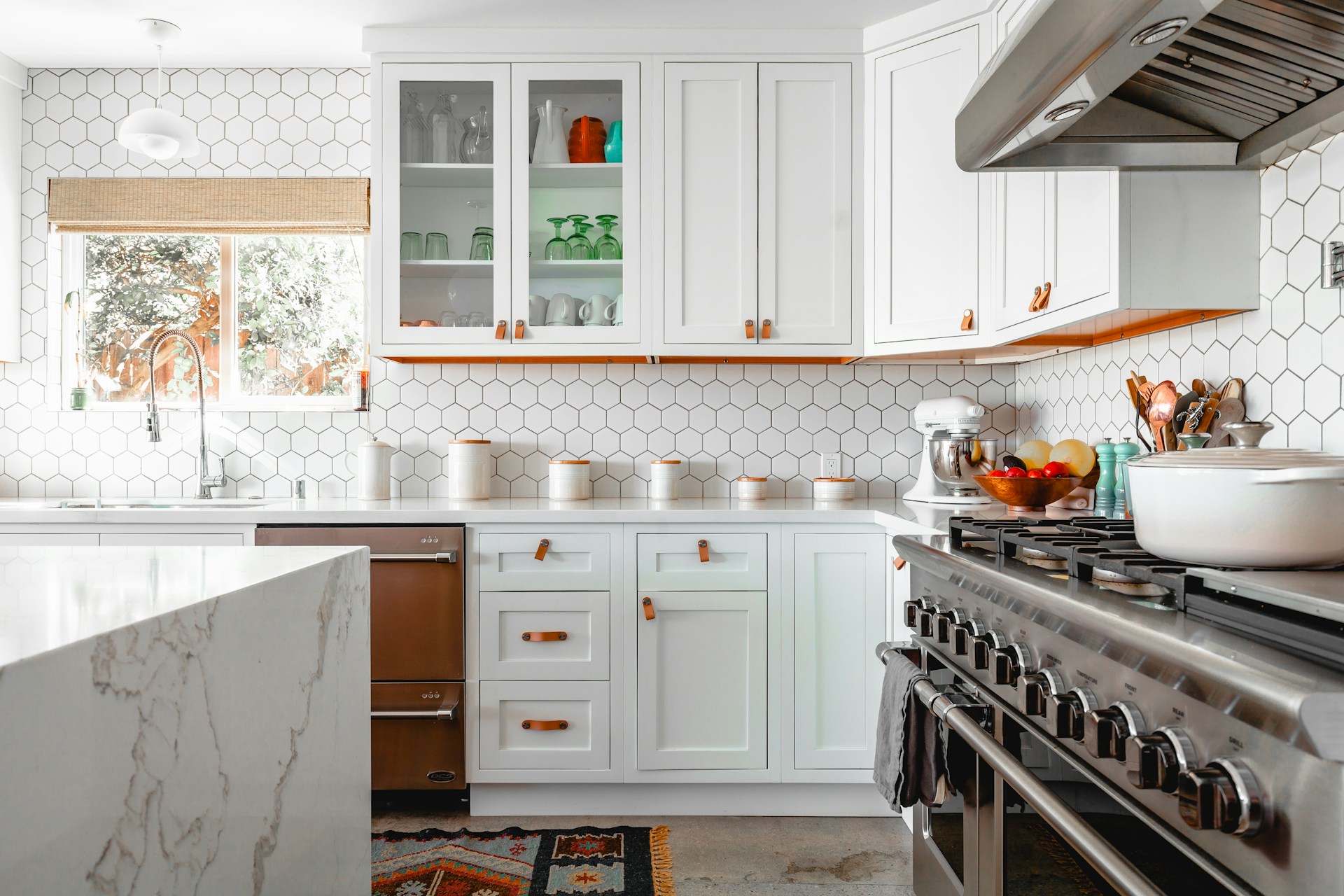
There’s no better flow state for a chef than working in a functional kitchen.
And since it’s where most families spend the majority of their time at home, it’s also one of the most important rooms to consider when it comes to feng shui interior design for California homes.
A few feng shui rules we like for a kitchen:
- Maintaining a clear prep zone
- Storing tools you use daily in accessible spaces
- Keeping the trash, sink, stove, and refrigerator within reach of one another
If you often find yourself dining outside, think about how your kitchen opens up to your outdoor space.
Bedroom
Your bedroom is your sanctuary. It should feel like a safe space for you to rest.
For a feng shui bedroom layout, start by placing your bed against a solid wall, with space on both sides if the room allows for it. If the only space for your bed is under a window, you can place a large headboard behind it with layered window treatments to create better support.
Your bedroom is also a place to think about window treatments.
One thing we always consider with feng shui interior design for California homes is light.
Natural light is great, but if you have a west-facing bedroom that takes on the brunt of the low-angle afternoon sun, lined drapery or woven shades can create a calmer, more comfortable space.
Bathroom
Bathrooms can be one of the hardest rooms to incorporate feng shui rules into, especially in older Los Angeles homes with quirky layouts.
But even if you aren’t able to invest in a full bathroom renovation, you can still incorporate some feng shui with a few little updates:
- Create contrast for the water element in your bathroom with earth elements, such as bath stones or a warm wood vanity.
- Opt for soothing colors that promote relaxation, such as light blues or soft whites.
- Have lighting that’s bright enough to energize you in the morning yet warm enough to create a relaxed atmosphere when you need to unwind.
- Use mirrors to create a larger space (just make sure the mirror doesn’t reflect the toilet)
Design a Home That Feels Better to Live In
Designing a feng shui home can feel complex. After all, the concepts that go into it have been evolving and multiplying for thousands of years. Plus, some of the rules may not be possible to follow given your home’s existing design.
In that case, you may consider seeing how you can incorporate elements of feng shui interior design in your California home with the help of experts who have worked in all kinds of spaces.
Get in touch with an expert at 5blox for a free consultation.