

December 3, 2025
Disaster-Proof Homes: The Future of Resilient Architecture
Wildfires are projected to increase by 50% globally by 2100, according to the U.N. Environment Programme. In California, where dry seasons grow longer each year, the threat of fire, earthquakes, and other extreme weather events has changed how people think about home design.
Building safely is now more of a necessity than ever.
Modern disaster-proof homes are designed to resist the forces of nature with all the comforts and energy efficiency of new construction builds. The style of architecture combines smart engineering, sustainable materials, and strategic planning to keep homeowners safe, even during the worst crises.
As Los Angeles architects and builders continue advancing resilient design architecture, the future of California living will be better equipped to adapt and recover when disaster strikes.
What Is Resilient Architecture?
Modern disaster architecture, as we know it, is just as much about survival as it is appearance. The goal is to create disaster-proof homes that can endure the worst so that we can ultimately minimize the costs of damage and recovery. With changes in eco-friendly design and advanced safety engineering, architects are now able to build homes that remain functional, even when faced with extreme weather or seismic activity.
Architects and builders now rely on structural systems, materials, and strategies, such as:
- Elevated foundations that prevent flooding in low-lying coastal regions
- Reinforced concrete and steel framing for better structural strength
- Fiber-reinforced clay and other composites for added fire resistance
- Special engineering methods that stabilize roofs and walls against heavy winds and earthquakes
Resilience also extends to the outdoors. In fact, resilient landscaping played a major role in saving several homes during the Palisades and Eaton fires in early 2025. The idea behind this style of landscaping is to design yards that slow or stop the spread of fire. Some elements include gravel borders, trimmed vegetation, and low-lying plants that reduce fuel sources.
Defensible spaces also help create natural barriers to protect the home. One remarkable example is the Palisades home that was featured in Time Magazine, which survived the major wildfire thanks to these same principles. This disaster-proof home used fire-resistant materials, open gravel zones, and minimal wooden elements to prevent the flames from spreading.
Here in Southern California, where hillside homes are more at risk due to dry vegetation, architectural services that use these strategies are becoming increasingly important.
Can Disaster-Proof Homes Protect Us from Earthquakes?
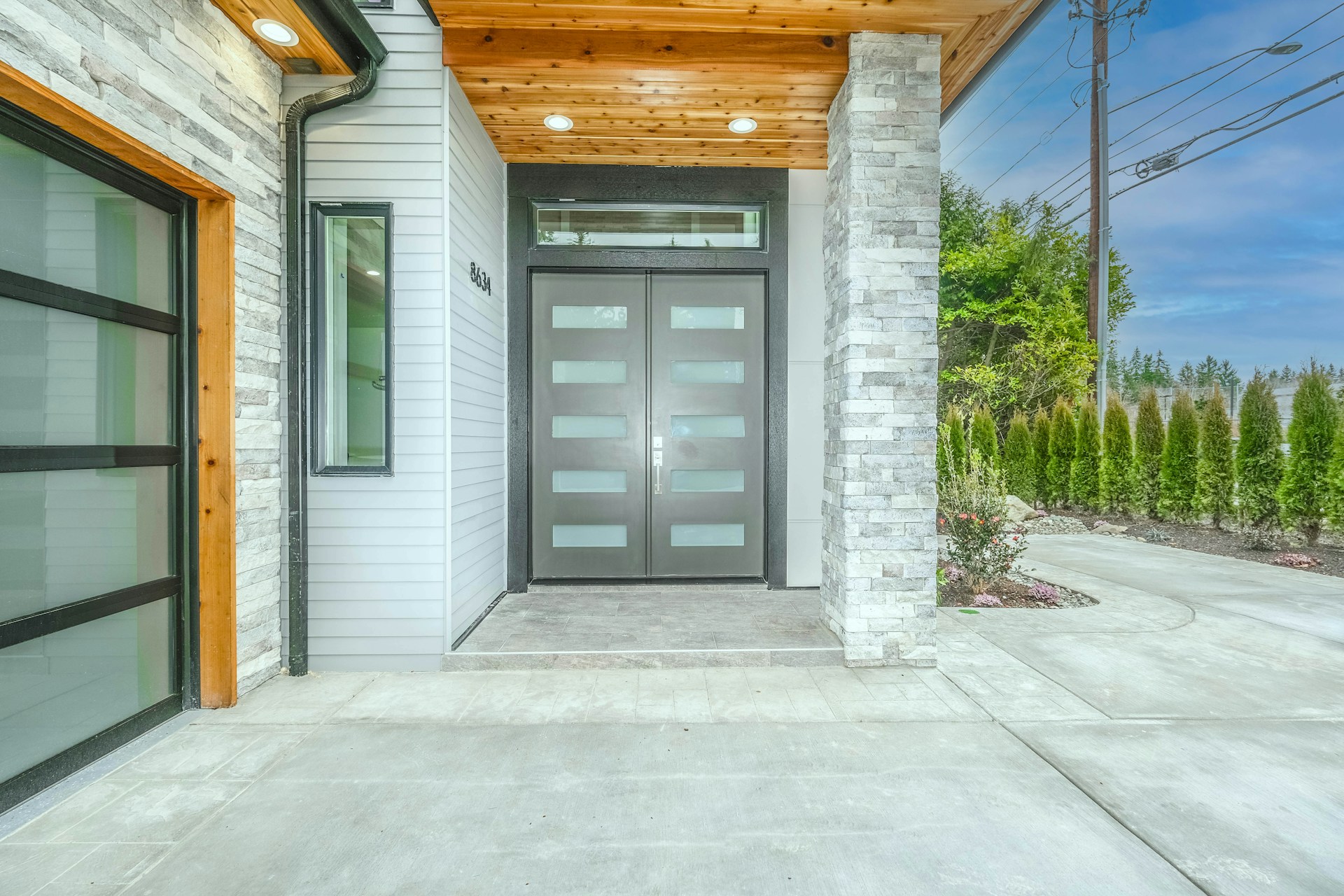
California sits on some of the most active fault lines in the country, making safety one of the key elements in our disaster-proof homes. While no structure can completely eliminate risk, new engineering methods help reduce the impact of earthquakes and protect homeowners from catastrophic damage.
One of the most effective techniques used in disaster architecture today is base isolation. This system separates the building from the ground using flexible bearings that absorb seismic energy so that the structure can move independently of the shaking earth beneath it. Studies show that base isolation can reduce ground motion transfer by up to 75%, a significant safety increase for homeowners.
The 1994 Northridge and 2019 Ridgecrest quakes paved the way for better building codes and retrofit requirements throughout California. These standards have continued to evolve, shaping how engineers approach new home construction.
Many homes now include flexible steel framing (particularly in multi-story homes) and smart sensors that can track foundation movement in real time.
How Disaster-Proof Homes Reduce Energy Vulnerability
Building safer houses goes hand in hand with creating energy-secure communities. A recent study in Renewable and Sustainable Energy Reviews examines how thoughtful planning for disaster-proof homes can reduce neighborhood-wide power risks during crises.
Researchers such as Caroline Hachem-Vermette, an associate professor of Building, Civil, and Environmental Engineering, found that improved design can help entire neighborhoods recover faster after disruptions.
Many California communities are now integrating solar arrays, battery systems, and wind power into residential planning. While challenges remain, these methods can help build climate-resilient housing that supports residents, even when traditional power systems fail.
Innovative Materials in Use
The next generation of disaster-proof homes relies on both advanced materials and digital technology. Builders and designers are now using artificial intelligence and digital platforms like Twinmotion to model every stage of construction before breaking ground.
With the simulations, teams can now test how structures would respond to earthquakes, high winds, and fires. As such, we can make disaster architecture safer and more predictable than ever.
Beyond its planning purposes, this new technology includes smart building systems and automation tools that help track energy use, temperature changes, and structural strain to improve long-term safety and efficiency.
Some of the modern materials and production methods we’re starting to see in new builds include:
- 3D printing, which allows for fast, precise construction using recycled and low-carbon compounds
- Self-healing concrete for repairing small cracks before they spread
- Fire-resistant composites for better fireproofing of homes in wildfire-prone regions
Embracing Disaster-Proof Homes for a Safer Future
The growing threat of natural disasters will have to reshape how builders look at home construction here in California and beyond. Disaster-proof homes provide strong foundations for safety, sustainability, and comfort.
By designing with adaptability in mind, we can better protect our beloved homes and reduce our environmental impact.
Our 5blox team has adopted the principles of disaster architecture and climate-resilient housing so that we can be part of developing the next generation of disaster-proof homes here in Southern California.
It’s time to begin looking at how homes can endure and adapt to whatever the future holds.